


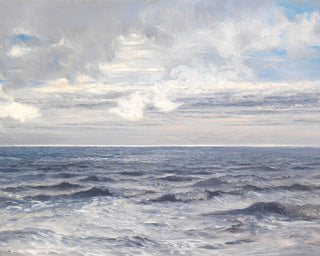


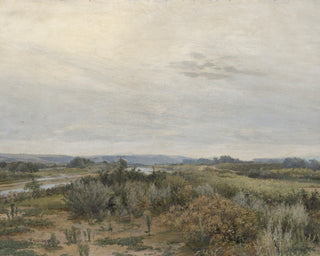


Jean-Baptiste-Camille Corot (1796–1875) was a French landscape painter whose long career bridged the classical landscape tradition of the seventeenth century and the plein-air naturalism that would eventually become Impressionism. Working outdoors in Italy, in the forests of Fontainebleau, and along the rivers of northern France, he developed a gentle, silvery tonality — hazy distances, soft light filtering through foliage, water surfaces that seem to breathe — that made his paintings feel less like records of specific places than like emotional states held in suspension. He was extraordinarily generous to younger artists, including Berthe Morisot and Camille Pissarro, who both acknowledged a direct debt. One of the most widely forged artists in history — thousands of spurious "Corots" circulated throughout the twentieth century, prompting the quip that "Corot painted 3,000 canvases, 10,000 of which are in America" — the genuine works are among the most peaceful and pleasurable landscapes in European art.
You’re viewing 1-1 of 1 products